
Spiti Valley Bike Trip 2025: Complete Guide to the Ultimate Himalayan Adventure
Introduction: The Call of the Cold Desert
Have you ever dreamed of riding through landscapes that look like another planet? Where barren mountains meet brilliant blue skies, ancient monasteries cling to cliffsides, and roads wind through valleys untouched by time? Then Spiti Valley is calling your name. Known as “Little Tibet,” Spiti is India’s most spectacular high-altitude cold desert, offering motorcycle adventures that become lifelong memories.
Imagine riding at altitudes where eagles soar below you. Picture yourself crossing mountain passes over 15,000 feet, surrounded by snow-capped peaks touching the heavens. Furthermore, envision camping beside turquoise rivers under star-filled skies so clear you can see the Milky Way stretching across the horizon. Moreover, experience ancient Buddhist culture in villages where life hasn’t changed for centuries. This is Spiti Valley – raw, remote, breathtaking, and absolutely unforgettable.
However, Spiti isn’t for everyone. This isn’t a comfortable valley tour with cozy cafés every few kilometers. Moreover, Spiti demands respect, preparation, and the right motorcycle. The roads are challenging, the altitude is extreme, the weather is unpredictable, and help is often hours away. Therefore, choosing the right bike and rental partner becomes crucial for a safe and successful journey.
At BRB Expeditions , we’ve been helping riders conquer Spiti Valley since 2014. With over a decade of experience, our own mechanic garage, and a fleet of 50+ well-maintained motorcycles, we ensure your Spiti adventure is thrilling, safe, and unforgettable. Moreover, we don’t just rent bikes – we provide the knowledge, support, and reliability that makes the difference between a dream trip and a nightmare in these extreme conditions.
Why Choose Spiti Valley for Your Next Bike Trip
Unlike other popular Himalayan routes, Spiti Valley is less commercialized, making it perfect for true adventure seekers. Riding through Spiti means conquering some of the highest motorable roads in the world, crossing river bridges, exploring remote villages, and connecting with nature at its purest.
Here’s what makes Spiti special:
Scenic Diversity: From barren landscapes of Kaza to green valleys of Kinnaur, every kilometer feels different.
Adventure Factor: Riding through passes like Kunzum La (4,590 m) and narrow mountain trails adds adrenaline to your journey.
Cultural Richness: Ancient monasteries like Key, Dhankar, and Tabo give you glimpses of Buddhist heritage.
Photography Paradise: The stunning mix of blue skies, brown mountains, and snow peaks make every stop Insta-worthy.
Best Time to Visit Spiti Valley
Timing is crucial for Spiti trips. The valley is accessible only during specific months, and conditions vary significantly throughout the season.
June to September: The Riding Season
June and Early July: Spiti just opens after winter, and snow still blocks higher areas. However, early season has advantages – fewer tourists, fresh snow on peaks creating stunning views, and a sense of pioneering as you’re among the first riders of the season. Moreover, rivers are at their fullest from snow-melt, creating dramatic water crossings.
Challenges include possible road blocks from late snow, extremely cold nights, and some roads still being repaired after winter. Nevertheless, experienced riders often prefer this period for its raw, untouched beauty.
Mid-July to August: This is peak season when Spiti is most accessible. All roads are open, weather is relatively stable, and temperatures are most comfortable (though still cold by plains standards). Additionally, all services – homestays, restaurants, mechanics – are fully operational.
However, peak season means more tourists and higher prices. Moreover, July and August bring occasional monsoon effects, particularly near Manali-Spiti routes. Rain can trigger landslides, though Spiti itself receives minimal rainfall.
September: Many consider September the best month for Spiti. Post-monsoon, skies are crystal clear with stunning visibility. Moreover, tourist numbers reduce, making it peaceful. Additionally, autumn colors add beauty to landscapes. Furthermore, weather remains rideable though nights get colder.
The challenge is that some homestays start closing by late September, and first winter snow can arrive unexpectedly. Therefore, flexibility in plans is essential.
What About October?
By October, Spiti starts shutting down for winter. While some die-hard riders still go, roads can close anytime due to snow. Moreover, most facilities close, and you need serious cold-weather gear. Therefore, October is only for very experienced riders prepared for extreme conditions and potential route changes.
Winter: Completely Inaccessible
November to May, Spiti is completely cut off. Snow blocks all access roads, and temperatures drop to -30°C or lower. The valley survives on supplies stored during summer. Therefore, motorcycle trips are impossible during this period.
Routes to Reach Spiti Valley
Spiti can be explored via different routes, each offering unique landscapes and challenges. Let’s explore the main ones below:
Route 1: The Classic Manali–Kaza–Manali Circuit (7–9 Days)
This is the most popular route and perfect for first-time Spiti riders.
Day 1: Manali → Kaza via Rohtang Pass & Kunzum Pass (200 km, 10–12 hrs)
Climb from Manali (6,726 ft) over Rohtang Pass (13,050 ft) and Kunzum Pass (15,059 ft) before descending to Kaza (12,500 ft). A demanding yet breathtaking day through rapidly changing terrain. Riders can split the journey with a stay in Batal or Losar.
Day 2: Rest and Explore Kaza
Take it easy—altitude and exhaustion demand rest. Explore Key Monastery, Kibber, and Chicham Bridge, while adjusting to the altitude.
Day 3: Kaza → Tabo (47 km)
Ride to the historic Tabo Monastery, over 1,000 years old and a UNESCO Heritage Site.
Day 4: Tabo → Pin Valley → Tabo (100 km round trip)
Explore the green beauty of Pin Valley National Park, home to rare wildlife and charming villages like Mud.
Day 5: Tabo → Dhankar → Kaza (80 km)
Visit the cliff-top Dhankar Monastery and the serene Dhankar Lake. Return to Kaza by evening.
Day 6: Kaza → Langza → Hikkim → Komik (50 km round trip)
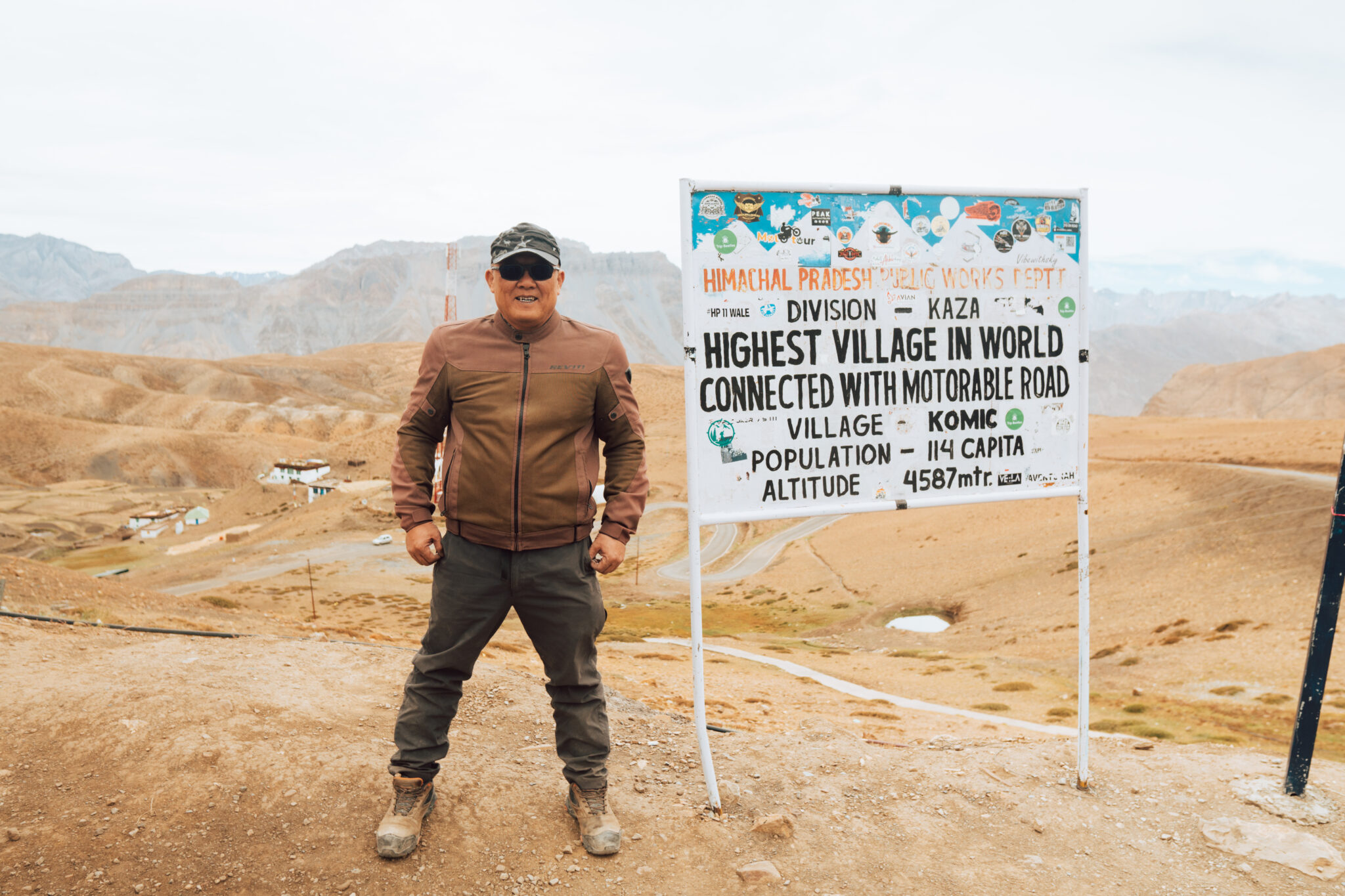
Discover Spiti’s highest villages—home to fossils, the world’s highest post office, and monasteries perched above clouds.
Day 7: Kaza → Chandratal Lake (95 km)
Ride to Chandratal (Moon Lake), a surreal turquoise lake at 14,100 ft. Camp under starry skies.
Day 8: Chandratal → Manali (120 km)
Return via Kunzum and Rohtang Pass. Long day but rewarding views.
Day 9: Buffer Day
Always add a buffer day for weather or rest.
Route 2: The Manali–Spiti–Kinnaur–Shimla Circuit (10–14 Days)
Ideal for those who want a diverse Himalayan experience without retracing roads.
Days 1–5: Follow the Classic Manali–Kaza itinerary.
Day 6: Kaza → Nako (110 km)
Day 7: Nako → Kalpa (110 km)
Day 8: Kalpa → Sarahan (75 km)
Day 9: Sarahan → Shimla (175 km)
Days 10–11: Buffer and Return
This route transitions from Spiti’s barren mountains to Kinnaur’s lush valleys, ending in Shimla. It’s longer but offers unmatched variety.
Route 3: The Ultimate Spiti–Ladakh Expedition (15–20 Days)
For experienced riders, this route combines Spiti and Ladakh into one legendary expedition.
From Kaza, continue towards Leh via Keylong, Sarchu, or Tso Moriri. This journey demands preparation, fitness, and high-altitude riding skills—but rewards you with once-in-a-lifetime adventure.
Route 4: The Scenic Aut–Jibhi–Jalori Pass–Ani–Rampur–Kaza Circuit (10–12 Days)
This is an offbeat and less crowded route, perfect for riders starting from Aut or Bhuntar, where reliable rentals like BRB Expeditions Aut offer well-serviced adventure bikes. It’s smoother than the Manali–Gramphoo route and ideal for gradual altitude gain.Day 1: Aut → Jibhi (35 km, 1.5 hrs)
Start from Aut and ride to Jibhi, a peaceful riverside village in Banjar Valley.
Stay by the river, explore waterfalls, or camp under pine trees.
Day 2: Jibhi → Shoja → Jalori Pass → Ani (65 km, 4–5 hrs)
Climb steeply to Jalori Pass (10,800 ft)—known for its panoramic views. Descend to Ani via Khanag.
Optional short trek to Serolsar Lake from Jalori.
Day 3: Ani → Rampur (90 km, 4–5 hrs)
Ride smooth winding roads with Sutlej views.
Stay in Rampur, a small town known for the Padam Palace.
Day 4: Rampur → Kalpa (105 km, 5–6 hrs)
Enter Kinnaur Valley. Stop at Reckong Peo before reaching Kalpa for mesmerizing views of Kinner Kailash.
Day 5: Kalpa → Nako (110 km, 6–7 hrs)
Ride past Khab Bridge, where the Spiti and Sutlej rivers meet.
Visit Nako Lake and enjoy the peaceful high-altitude setting.
Day 6: Nako → Tabo (63 km, 3 hrs)
Welcome to Spiti Valley! Visit Tabo Monastery and explore the village.
Day 7: Tabo → Dhankar → Kaza (80 km, 5 hrs)
Explore Dhankar Monastery and its ancient cliff-side structures before continuing to Kaza.
Day 8: Kaza Local Exploration (Langza, Hikkim, Komik)
Visit the highest motorable villages and experience local life.
Day 9: Kaza → Key Monastery → Kibber → Chicham Bridge (40 km round trip)
Visit Key Monastery and Asia’s highest bridge.
Day 10: Kaza → Chandratal (95 km, 6–7 hrs)
Ride through Kunzum Pass to reach Chandratal Lake.
Day 11: Chandratal → Manali (120 km, 8–10 hrs)
Return to Manali, completing your offbeat circuit.
Day 12: Buffer / Rest Day
Relax, or explore nearby areas like Mud Village (Pin Valley) or Losar.
Why Choose the Aut–Jibhi–Rampur Route?
- Smoother roads than Gramphoo stretch
- Gradual altitude gain (less AMS risk)
- Beautiful forests, rivers, and apple orchards before barren desert landscapes
- Option to rent bikes easily in Manali, Aut, Bhuntar (BRB Expeditions)
- Less crowded and great for photographers and beginners
Bikes We Don't Recommend for Spiti
Scooters: Completely unsuitable. Low ground clearance, small wheels, lack of power make them dangerous in Spiti conditions.
Sport Bikes: Low ground clearance, poor suspension travel, uncomfortable riding position for long days, and lack of low-end torque make them poor choices.
Heavy Cruisers: Weight becomes a liability on rough roads and during inevitable tip-overs. Moreover, most lack ground clearance for rough sections.
So What SHOULD You Ride in Spiti?
After explaining what doesn’t work, here’s what does:
Ideal Bikes:
- Royal Enfield Himalayan 411cc: Purpose-built for exactly this
- Royal Enfield Scram 411cc: Same capability, slightly different ergonomics
- Hero Xpulse 200: Lighter, more nimble option
- Royal Enfield Classic/Hunter 350: Reliable, proven workhorses (if you accept their limitations)
Why These Work:
- Adequate ground clearance (190-220mm)
- Proper dual-sport or all-terrain tires
- Suspension designed for rough terrain
- Manageable weight for lifting after falls
- Comfortable upright riding position
- Good low-end torque for altitude and slow riding
- Proven reliability in Himalayan conditions
- Easy to maintain and fix
- Spare parts available even in remote areas
Spiti is unforgiving. The right bike makes it an adventure you’ll treasure forever. The wrong bike makes it a nightmare you’ll want to forget. Choose wisely, or better yet, trust our decade of experience at BRB – we’ll recommend the perfect bike for your skills and plan
Essential Preparation for Spiti Valley Trip
Spiti demands thorough preparation. Success depends on planning, fitness, and proper gear.
Physical Fitness-
Start Training 2-3 Months Before:
- Cardiovascular fitness: Running, cycling, swimming
- Core strength: Crucial for long riding days
- Leg strength: Squats, lunges for bike handling
- Flexibility: Yoga helps with riding position comfort
Altitude Acclimatization:
- Spend 2-3 days in Manali before starting (helps body adjust)
- Ascend gradually when possible
- Stay hydrated constantly
- Avoid alcohol first few days
- Learn to recognize altitude sickness symptoms
Mental Preparation
Understand the Challenge: Spiti isn’t a vacation – it’s an expedition. Days are long and tiring, conditions are tough, and comfort is minimal. However, rewards are immense.
Flexibility is Essential: Road blocks, weather delays, and plan changes are normal. Rigid schedules cause stress. Go with the flow.
Patience Required: Everything takes longer in Spiti – riding, finding accommodation, getting food. Embrace the slower pace.
Gear Checklist for Spiti
Riding Gear:
- Full-face helmet (ISI/ECE certified minimum)
- Riding jacket with armor (waterproof essential)
- Riding pants with knee protection
- Proper riding boots (ankle protection, good grip)
- Riding gloves (warm, waterproof)
- Neck warmer/balaclava
- Knee guards additional to pants
- Back protector if jacket doesn’t have
Clothing (Layer System):
- Thermal innerwear (top and bottom) x 2 sets
- Fleece/down mid-layer
- Windproof/waterproof outer layer
- Regular riding clothes
- Warm socks x 4-5 pairs
- Warm beanie/cap for camp
- Lightweight camp clothes
- Extra warm layer for nights
Camping Gear (if camping):
- Sleeping bag rated to -10°C minimum
- Camping mat
- Headlamp with extra batteries
- Small pillow
Personal Items:
- Sunscreen SPF 50+ (essential at altitude)
- Lip balm with SPF
- Moisturizer (air is very dry)
- Sunglasses with UV protection (crucial)
- Personal medications
- First aid kit (comprehensive)
- Toiletries (minimal)
- Wet wipes/hand sanitizer
- Toilet paper
Documents and Money:
- Valid driving license
- Bike documents (provided by rental)
- Government ID
- Permits if required (check current requirements)
- Sufficient cash (₹15,000-20,000 recommended)
- Credit/debit card (limited use but keep as backup)
- Emergency contact numbers printed
Food and Water:
- Water bottles (3 liters minimum capacity)
- Water purification tablets
- High-energy snacks (nuts, energy bars, chocolates)
- Electrolyte powder/tablets
- Instant noodles (for emergencies)
Electronics:
- Mobile phone (BSNL works best in Spiti)
- Power bank (high capacity, 20,000mAh+)
- Charging cables
- Camera with extra batteries and memory cards
- Adapter/multi-plug
- Phone holder for bike
Bike-Specific:
- Bungee cords and cargo nets
- Bike cover (dust protection at night)
- Small lock and chain
- Spare clutch and accelerator cables
- Puncture repair kit
- Portable pump
- Basic tool kit
- Duct tape and zip ties
Health and Safety
Medications to Carry:
- Diamox (for altitude sickness – consult doctor)
- Pain relievers (paracetamol, ibuprofen)
- Antiemetic (for nausea)
- Antidiarrheal
- Antibiotics (broad-spectrum – with prescription)
- Cold and cough medicines
- Antiseptic cream
- Band-aids and bandages
- ORS packets
- Personal prescription medications with extras
Travel Insurance: Strongly recommended covering:
- Medical emergencies and evacuation
- Bike damage/loss
- Trip cancellation/delays
- Personal accident
Why Choose BRB Expeditions for Your Spiti Trip
Choosing the right rental partner is just as important as choosing the right motorcycle. When it comes to challenging terrains like Spiti, you need more than just a bike — you need expertise, reliability, and real mountain experience. That’s where BRB Expeditions stands out.
With branches in both Bhuntar (near Kullu-Manali Airport) and Aut (on the way to Jibhi and Jalori Pass), BRB offers unmatched convenience and support for riders starting the Spiti Valley journey via the Aut–Jibhi–Jalori–Ani–Rampur route.
Our Own Mechanic Garage – The Critical Difference
Unlike most rental agencies, BRB operates its own professional mechanic garages at both Bhuntar and Aut, equipped with skilled technicians and modern tools.
This ensures every motorcycle heading towards Spiti receives special expedition preparation beyond normal servicing:
Complete engine health inspection
Fresh oil suitable for high-altitude cold conditions
Brake system overhaul and testing
Suspension adjusted for luggage and pillion riding
Tire tread checked and replaced if necessary
Electrical systems verified (crucial in freezing temperatures)
Chain cleaned, lubricated, and tensioned
All nuts and bolts tightened for rough terrain
✅ This in-house preparation guarantees that you start your Spiti trip with a machine that’s battle-ready for Himalayan roads.
With expert preparation and on-call assistance, you can ride confidently without worrying about mechanical failures.
Roadside Support
If a breakdown occurs, our team provides remote troubleshooting and connects you with our local partners in Spiti for help. Since BRB’s fleet includes models like the Himalayan, Classic 350, and Xpulse — familiar to most local mechanics — assistance is always available.
10+ Years of Spiti Riding Experience
Since 2014, BRB has been guiding riders through Spiti — making us one of the region’s most trusted names.
Deep Route Knowledge: We know every twist and turn, from Jalori Pass to Kaza and Kunzum La.
Honest Advice: We match bikes to your skill level and trip style — never just what’s available.
Insider Tips: Our team shares real insights about fuel stops, hidden homestays, and weather updates that only years of experience can offer.
Whether you begin your journey from Manali, Aut or Bhuntar, you’ll get expert guidance on the best route plan, timing, and acclimatization schedule.
Fleet of 50+ Well-Maintained Bikes
Our large fleet allows us to deliver both variety and reliability:
Availability: Even during peak summer months, bikes are always ready at both our Aut and Bhuntar branches.
Choice: From nimble 200cc dual-sports to powerful 411cc Himalayans, select what fits your comfort.
Backup Options: In rare cases of major mechanical issues, we can arrange a replacement bike quickly through our own or partner network.
Consistent Quality: Every motorcycle is maintained to BRB’s strict standards — no matter the model or mileage.
Transparent, Fair Pricing
No Hidden Costs: What we quote is exactly what you pay.
Refundable Security Deposits: ₹2,000–₹10,000 depending on the bike type.
Fair Damage Policy: We understand mountain riding — minor scratches are normal, not penalized.
Fuel Policy: Return the bike with the same level of fuel you received it with — simple and fair.
Proper Documentation and Insurance
- All bikes have valid registration, insurance, and PUC certificates.
Third-party insurance covers liability under Indian law.
Personal and travel insurance is recommended for riders.
We provide all documents and help you with any permits required for the Spiti route.
Every rental from BRB is 100% compliant and road-legal — so you ride with complete confidence
Full Customer Support Throughout the Journey
- Pre-Trip: Briefing on route, gear checklist, and bike handling tips.
During Trip: 24/7 phone support from our Bhuntar and Aut teams.
Post-Trip: Smooth return process and feedback assistance for future rides.
Whether you’re on your way up through Jalori Pass or crossing Kunzum La, help is never far away.
Proven Track Record: 900+ Happy Riders
With over a decade of service and 900+ five-star Google reviews, BRB has earned the trust of riders from India and abroad. Many adventurers come back year after year — not just for our bikes, but for our reliability, professionalism, and deep understanding of the Himalayas.
In Short
Start Point Options: Aut or Bhuntar – both branches offer full-service facilities.
Trusted for Spiti: 10+ years of proven experience on Himalayan routes.
Guaranteed Quality: In-house garage, large fleet, fair pricing, 24/7 support.
When you ride with Bike Rentals Bhuntar (BRB), you’re not just renting a bike — you’re partnering with experts who live and breathe Himalayan expeditions.